
Roofing across Carlisle, Cumbria & South West Scotland

07519 261004

Roof Evidence & Repair Guide

Repair or re-roof?

The evidence that points to an isolated repair, the evidence that points to renewal, and the questions that separate the two honestly.

Answers in this topic

How do I know whether to repair or replace my roof?

The short answer

Judge it on the pattern of failure, not the age of the roof. Isolated defects on an otherwise sound covering with sound fixings point to repair. Failures appearing in different places, fixings that crumble when handled and underlay that tears as soon as it is disturbed point towards renewal of at least part of the roof.

What evidence should you look for?

Repeated failures in different locations rather than around one detail.

What it can mean
The fixings or the covering as a whole are reaching the end of their life.
What else could explain it
A run of severe weather can cause scattered damage on a roof that is otherwise serviceable.

Investigate · Inspection needed to confirm

Underlay that is brittle or torn wherever a covering is lifted, and fixings that break rather than withdraw.

What it can mean
Any repair will disturb neighbouring units, so patching gets progressively harder.
What else could explain it
Brittleness can be local where one area has had prolonged exposure to sun or water.

Investigate · Inspection needed to confirm

What could this mean?

A useful question is what a repair would actually achieve. If a patch is likely to hold for a decade, repair it. If it is likely to be followed by another patch next winter, the honest conversation is about renewal — of a slope, not necessarily of the whole roof.

What this evidence cannot tell you

Nobody can make this judgement responsibly from the ground. It needs close inspection of fixings, battens and underlay in more than one place.

What are the realistic options?

  • Isolated repair

    One or two defects, sound fixings, intact underlay around them.

  • Partial renewal

    One slope or elevation failing while the others remain in good condition.

  • Full reroof

    Widespread fixing failure, failed underlay throughout and defects across multiple slopes.

A wider scope should be justified by what the evidence shows, not assumed.

What should you be shown before agreeing to the work?

  • Photographs of the fixings, not only of the roof surface
  • The condition of underlay and battens where coverings were lifted
  • How many separate defects were found, and where
  • Why a repair is or is not expected to hold
  • What the inspection could not access or see

Not every job needs every item. The point is that whatever is recommended should be supported by evidence you can see and a scope you can read.

What this looks like on a real roof

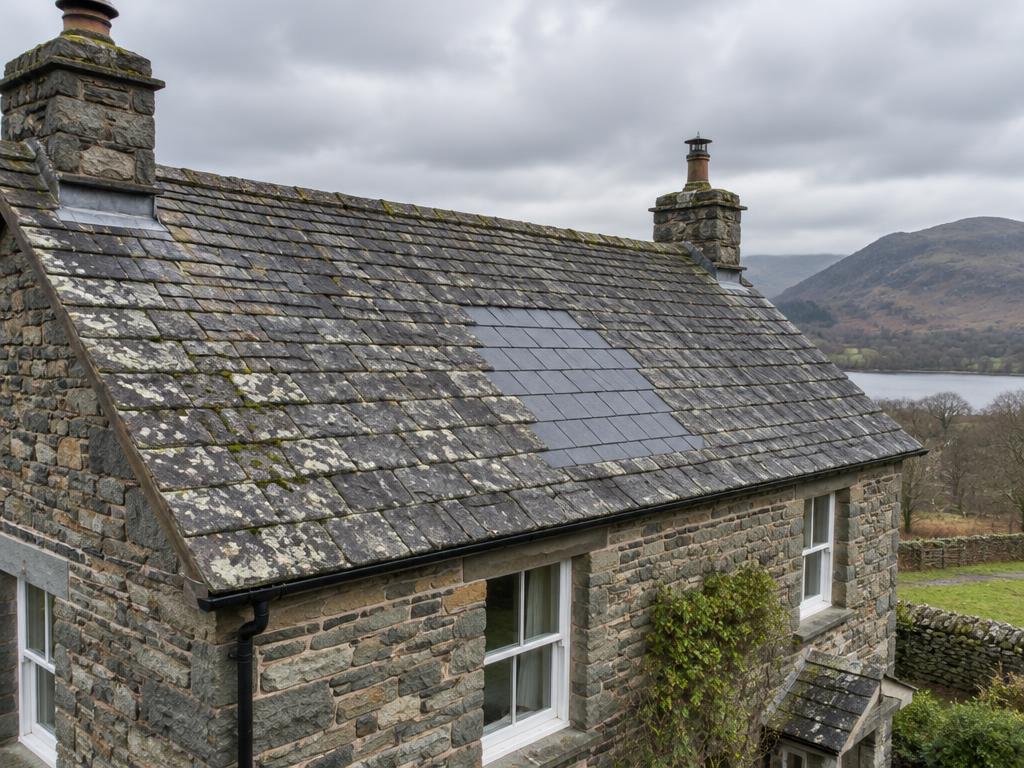
Illustrative example: aged slate cottage roof with one localised area of replacement slates in an otherwise sound covering

Illustrative example — not a record of a completed job

An older roof and a concern that its age alone meant a full replacement was due.

Property
Stone cottage with an aged natural slate roof
Area
Typical of rural properties in the Eden Valley and Lake District fringe
Evidence found
One area of slipped and cracked slates on a sheltered pitch, with the remaining slates sound, laps correct and no widespread nail failure visible.
How it was inspected
External inspection of both pitches together with loft observation of the underside of the covering.
Assessment
Evidence of a single failed area, rather than repeated failures across the roof, supports a localised repair. Age on its own is not evidence that a roof needs replacing.
Scope of work
Isolated repair
Outcome
A patch repair with matched reclaimed slate, and a note to re-inspect in a few years, is the proportionate response where the wider covering still has serviceable life.

Related services

What should you do next?

Ask for both options to be quoted where both are credible, with the evidence that supports each. A recommendation you can check is worth more than one you have to take on trust.

Read the full guide on this

Can only one section of a roof be replaced?

The short answer

Often, yes. Where one slope or elevation has deteriorated and the others have not, renewing that section alone is a legitimate and frequently sensible option. The joins at ridge, hip or valley need proper detailing, and new coverings rarely match weathered ones exactly, but partial renewal can be both sound and good value.

What evidence should you look for?

One slope in clearly worse condition than the rest — usually the most exposed.

What it can mean
Deterioration is being driven by exposure rather than by age alone.
What else could explain it
An earlier partial repair may have left that slope with a different, shorter-lived specification.

Investigate · Inspection needed to confirm

What are the realistic options?

  • Partial renewal

    A single slope failing while the remainder is sound and serviceable.

A wider scope should be justified by what the evidence shows, not assumed.

What this looks like on a real roof

Illustrative example: aged slate cottage roof with one localised area of replacement slates in an otherwise sound covering

Illustrative example — not a record of a completed job

An older roof and a concern that its age alone meant a full replacement was due.

Property
Stone cottage with an aged natural slate roof
Area
Typical of rural properties in the Eden Valley and Lake District fringe
Evidence found
One area of slipped and cracked slates on a sheltered pitch, with the remaining slates sound, laps correct and no widespread nail failure visible.
How it was inspected
External inspection of both pitches together with loft observation of the underside of the covering.
Assessment
Evidence of a single failed area, rather than repeated failures across the roof, supports a localised repair. Age on its own is not evidence that a roof needs replacing.
Scope of work
Isolated repair
Outcome
A patch repair with matched reclaimed slate, and a note to re-inspect in a few years, is the proportionate response where the wider covering still has serviceable life.

Related services

What should you do next?

Ask how the new and existing sections will be joined at the ridge or valley, and expect an honest answer about appearance as well as performance.

Can existing slate be reused during re-roofing?

The short answer

Often a good proportion can. Sound slate is stripped, sorted and re-laid over new underlay and battens with new fixings, with breakages made up from matched reclaimed or new slate. It suits historic and conservation properties particularly well. Expect honest sorting losses — a realistic estimate is part of a straight quotation.

What evidence should you look for?

Slates that remain hard and flat once stripped, without cracks around the nail holes.

What it can mean
A usable proportion can be re-laid.
What else could explain it
Slates can look sound and still fail during stripping, which is why losses are estimated, not guaranteed.

Monitor · Inspection needed to confirm

Related services

What should you do next?

Ask what percentage of reuse is expected, where any make-up slate will come from, and how any shortfall would be priced.

Go deeper on this topic

Related services

Back to the Roof Evidence & Repair Guide

Reviewed by Aaron, Owner, Elite Roofing Services Cumbria Ltd — last reviewed .

Need a roofer in Carlisle or Cumbria?

Tell us what is happening with your roof and send photographs if you have them. We will tell you what we think is wrong and what it will take to put right.

Call nowFree quote