Which roof problems should never be ignored?
The short answer
Four situations justify acting quickly: water actively entering the building, any sign of structural movement, an unstable chimney or ridge above a public area, and an opening left by a storm. Everything else can usually be planned. The distinction is whether the defect threatens safety or is getting materially worse with each spell of weather.
What evidence should you look for?
Water running or dripping indoors, or a ceiling bulging and holding water.
- What it can mean
- An open water path exists and the ceiling may be at risk of collapse.
- What else could explain it
- A burst or leaking pipe in the loft produces the same symptom and needs a plumber, not a roofer.
Emergency · Inspection needed to confirm
A leaning chimney, cracked stack, or ridge units visibly loose above a pavement or garden.
- What it can mean
- Material could fall, which is a safety matter before it is a roofing one.
- What else could explain it
- Old stacks often lean slightly from historic sulphate attack and have been stable for years.
Urgent · Inspection needed to confirm
What could this mean?
Urgency is about rate of change and risk to people, not about the size of the defect. A small opening above a bedroom in January matters more than a large cosmetic flaw on a garage.
What this evidence cannot tell you
This is general guidance. Whether your particular roof is urgent depends on evidence from your property, not on a list.
How serious is it? — Urgent
These specific conditions involve active water entry or a risk of material falling, both of which worsen quickly.
What this looks like on a real roof
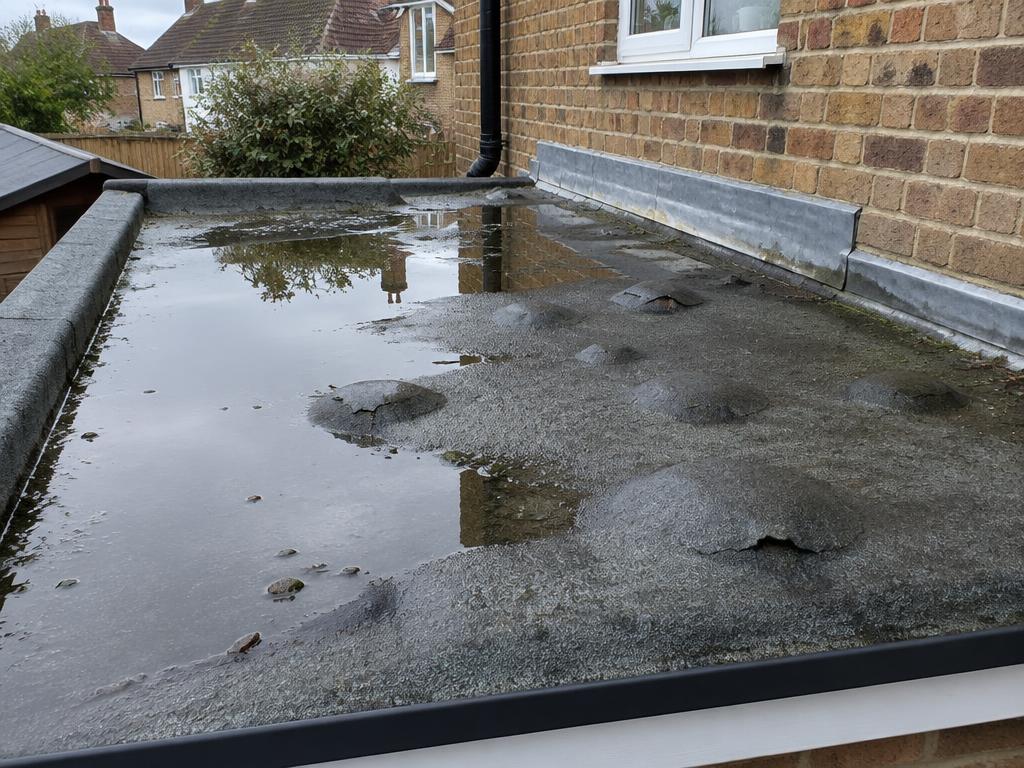
Illustrative example — not a record of a completed job
Damp appearing on a kitchen ceiling after heavy rain, drying back in settled weather.
- Property
- Rear kitchen extension with a felt flat roof
- Area
- Common on post-war and later extensions throughout the area
- Evidence found
- Water standing on the roof long after rainfall, blistering across the felt surface, and a tired upstand at the wall abutment.
- How it was inspected
- External inspection of the flat roof surface, abutment and outlet.
- Assessment
- Ponding and blistering show a covering that is no longer shedding water as intended. They do not show whether the deck or insulation below has taken up moisture.
- Scope of work
- Further investigation
- Outcome
- Where the deck proves sound, recovering the roof with improved falls and a new upstand detail is typical; where it does not, the build-up is opened up before anything is priced.
Related services
- Emergency Roof RepairsAn emergency roof repair makes a property safe and watertight quickly after storm damage, a sudden leak or falling slates. The first visit stops water entering and removes any danger to people below; the permanent repair follows once the roof is safe to work on.
- Chimney RepairsChimney repairs cover repointing, rebuilding, flaunching, flashing renewal, pot and cowl work and, where a stack is redundant, removal below the roof line. Chimneys are the most exposed masonry on a building and are the single most common source of roof leaks.
What should you do next?
If water is coming in now, protect the area below, avoid standing under a bulging ceiling, and call for emergency attendance rather than waiting for a planned appointment.
Reviewed by Aaron, Owner, Elite Roofing Services Cumbria Ltd — last reviewed .
Related questions
More in Roof Problems & Warning Signs
- How do I know if my roof needs repairing?
- What are the early warning signs of roof damage?
- Is one missing roof tile or slate serious?
- Why do roof slates keep slipping?
- Can strong winds damage a roof without blowing tiles off?
- What does a sagging roof mean?
- Why can I see daylight through my roof from the loft?
- Why are pieces of slate or tile appearing in my gutter?